Benicio-wears-PUMA
Puma and Benicio del toro
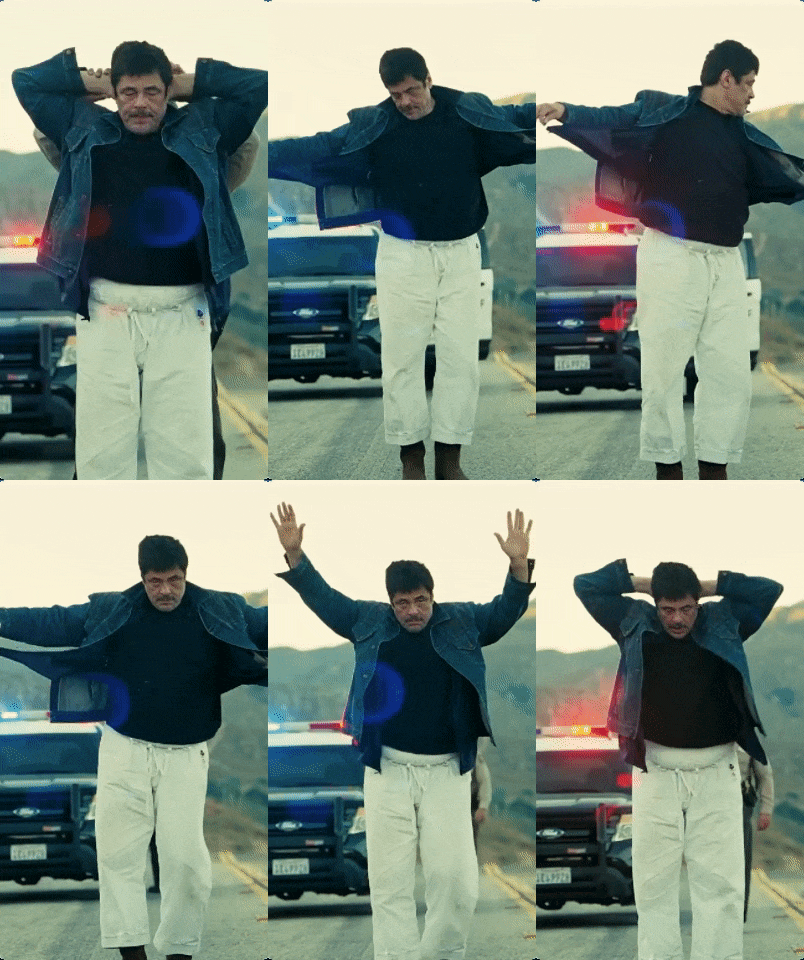
I don't think they paid for it. I doubt PTA would have taken the money. But one of the most beloved characters of the year—Sensei Benicio—spends the first part of "One Battle After Another" wearing a jersey with a massive PUMA logo. In some shops, they're selling it as almost a collector's item. $250! The jacket reflects a certain style of person, and we understand Colleen Atwood's choice. He cares a bit but not too much, mildly athletic, somehow romantic about something. PUMA was one of the icons of Latin American football with figures like Maradona and Pelé. It has a certain nostalgia for an older generation. PUMA is much older than Nike, and this history was used to lend the character personality. Benicio del Toro is brilliant in the movie—he doesn't say much, has viral physicality, and even has a dance scene that's become iconic. Colleen Atwood, the costume designer, is a veteran of the industry. Over 90 movies, which is a serious accomplishment. She's 77 years old, which is refreshing when so many people in the industry are (rightfully) concerned about ageism. From her work, we love "The Silence of the Lambs," Tim Burton's "Sweeney Todd" and "Mars Attacks," Kasdan's "Wyatt Earp," and more recently—for certain audiences—"Wednesday" (the series) and "Fantastic Beasts." She's won 4 Oscars. A supreme career spanning over 40 years, with first IMDb credits in 1984. She's the opposite of a nepo baby. When someone is successful, the first check—especially in Europe—seems to be: "Who helped her?" Here's the Wikipedia information, quite enlightening: Born in Ellensburg, Washington, Atwood grew up in the small farming community of Quincy, Washington. At 17, she became pregnant and didn't graduate with her class. To support her baby and her husband, who was in college, she took a job at a French fry factory. Then, Atwood received a scholarship to attend Cornish College of the Arts in Seattle in the early 1970s. That sounds intense. As usual, it's impossible to get accurate numbers for any Hollywood production. Estimates put "One Battle After Another" at $150M production budget, which includes talent. Using the 50/50 rule, that's around $75M for actual production costs. An interesting trend we're seeing with some department heads—that rarely happens for others—is the "setless" life. We have a strong costume designer in Barcelona whose approach is: "I do the prep, the decks, and the fittings. After that, I send assistants on set because my value isn't as high once the wardrobe is bought, confirmed, and on a truck." She offers us a better deal, and it makes sense. I can't imagine Mrs. Atwood being on set for 14 weeks with 12-hour days, and she shouldn't either. How we think about compensation in the industry will continue to evolve. Back to PUMA and Benicio: PUMA didn't pay Benicio anything. He made them money. "One Battle After Another" opened September 26, 2025. Since that day, PUMA stock has risen 10%.
The best product placement of the decade
I don't think they paid for it.
I doubt PTA would have taken the money.
But one of the most beloved characters of the year—Sensei Benicio—spends the first part of "One Battle After Another" wearing a jersey with a massive PUMA logo.
In some shops, they're selling it as almost a collector's item. $250! The jacket reflects a certain style of person, and we understand Colleen Atwood's choice. He cares a bit but not too much, mildly athletic, somehow romantic about something. PUMA was one of the icons of Latin American football with figures like Maradona and Pelé. It has a certain nostalgia for an older generation. PUMA is much older than Nike, and this history was used to lend the character personality.
Benicio del Toro is brilliant in the movie—he doesn't say much, has viral physicality, and even has a dance scene that's become iconic.
Colleen Atwood, the costume designer, is a veteran of the industry. Over 90 movies, which is a serious accomplishment. She's 77 years old, which is refreshing when so many people in the industry are (rightfully) concerned about ageism.
From her work, we love "The Silence of the Lambs," Tim Burton's "Sweeney Todd" and "Mars Attacks," Kasdan's "Wyatt Earp," and more recently—for certain audiences—"Wednesday" (the series) and "Fantastic Beasts." She's won 4 Oscars. A supreme career spanning over 40 years, with first IMDb credits in 1984.
She's the opposite of a nepo baby. When someone is successful, the first check—especially in Europe—seems to be: "Who helped her?" Here's the Wikipedia information, quite enlightening:
Born in Ellensburg, Washington, Atwood grew up in the small farming community of Quincy, Washington. At 17, she became pregnant and didn't graduate with her class. To support her baby and her husband, who was in college, she took a job at a French fry factory. Then, Atwood received a scholarship to attend Cornish College of the Arts in Seattle in the early 1970s.
That sounds intense.
As usual, it's impossible to get accurate numbers for any Hollywood production. Estimates put "One Battle After Another" at $150M production budget, which includes talent. Using the 50/50 rule, that's around $75M for actual production costs.
An interesting trend we're seeing with some department heads—that rarely happens for others—is the "setless" life. We have a strong costume designer in Barcelona whose approach is: "I do the prep, the decks, and the fittings. After that, I send assistants on set because my value isn't as high once the wardrobe is bought, confirmed, and on a truck."
She offers us a better deal, and it makes sense. I can't imagine Mrs. Atwood being on set for 14 weeks with 12-hour days, and she shouldn't either. How we think about compensation in the industry will continue to evolve.
Back to PUMA and Benicio: PUMA didn't pay Benicio anything. He made them money.
"One Battle After Another" opened September 26, 2025. Since that day, PUMA stock has risen 10%.