CREATIVE SANCTUARY WITH NEYMAR JR
HERO VIDEO
Across Two Continents .
At 40% of Typical Industry Cost
The case for stripping out the agency layer and what it means for production, speed, and distribution.
Brands are bringing creative decisions in-house. According to the World Federation of Advertisers, 66% of brands now operate in-house agencies, with 70% holding strategic capabilities internally. The shift is accelerating, and it's changing who gets hired and how productions get structured.
For PUMA's SS26 Future 9 campaign, that shift produced something specific: a six-month, two-continent production spanning Santos, Brazil, and London, covering three players, including Neymar Jr., generating hero films, player-specific edits, stills, and a full suite of social assets — without a traditional advertising agency in the middle.
FALCA produced it. This is how it worked.
Three Parties, Not Five
The traditional structure for a campaign of this scope: brand → agency → production company → director → post-production house. Each layer adds cost, communication overhead, and time.
The PUMA model was different. The brand's in-house creative team, led by Creative Director Abigail Rogers, defined the strategic direction. They contacted director Luca Homolka directly as creative lead and consultant. FALCA was brought in to execute across both production legs. Post-production was overseen by the director with direct client input. No agency. No intermediary.
[PLACEHOLDER: Quote from Abigail Rogers on choosing this structure]
In parallel, PUMA's in-house social media teams operated alongside production, capturing and distributing assets in real time. Not a handoff. A parallel workflow.
The result: total production cost came in at roughly 40% of what comparable campaigns in scope and ambition typically run, based on our experience producing at this level. That number isn't about cheaper rates. It's structural — fewer stakeholders means fewer approval rounds, faster decisions, and more budget going into what ends up on screen.
Santos, Brazil — July 2025
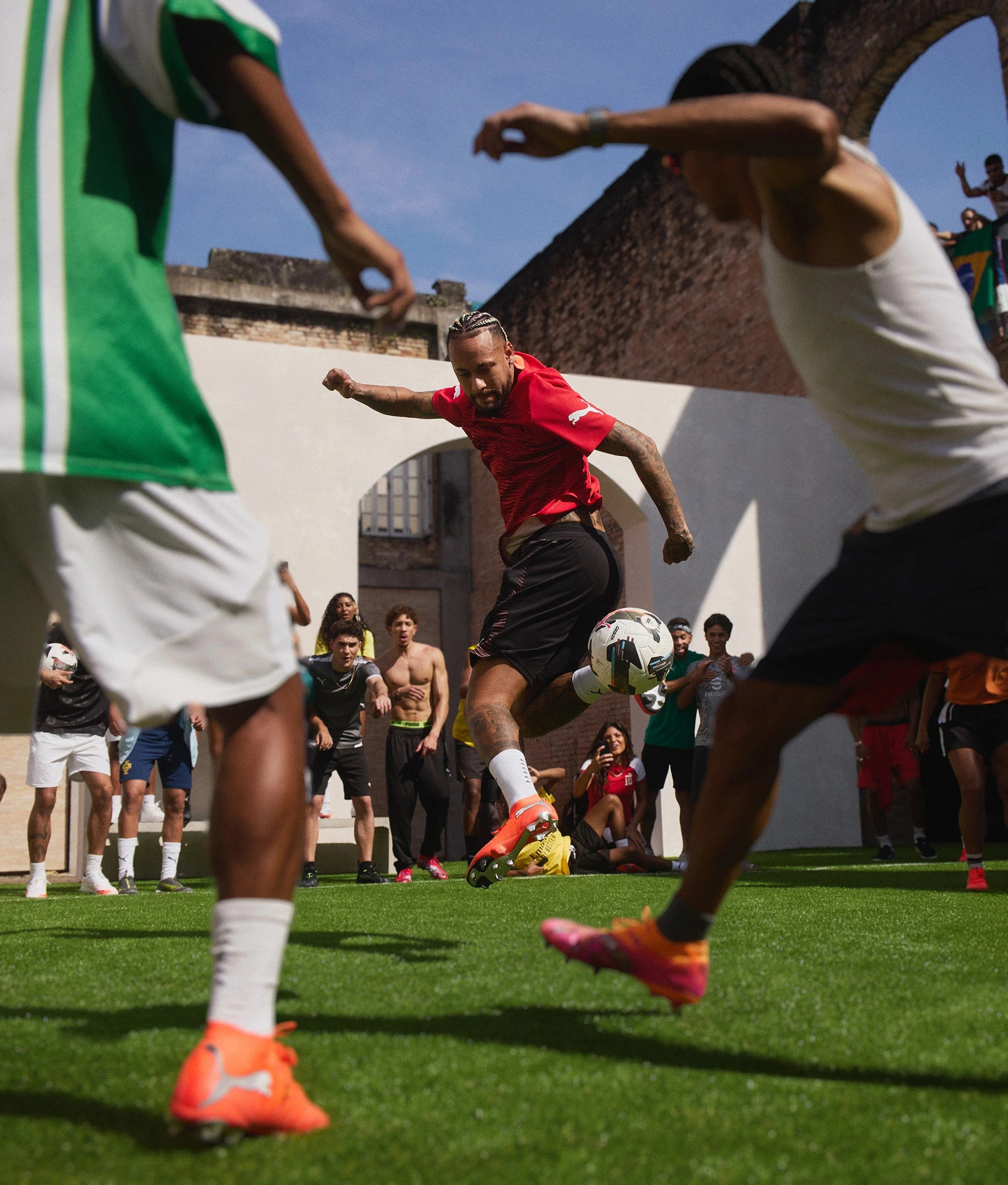
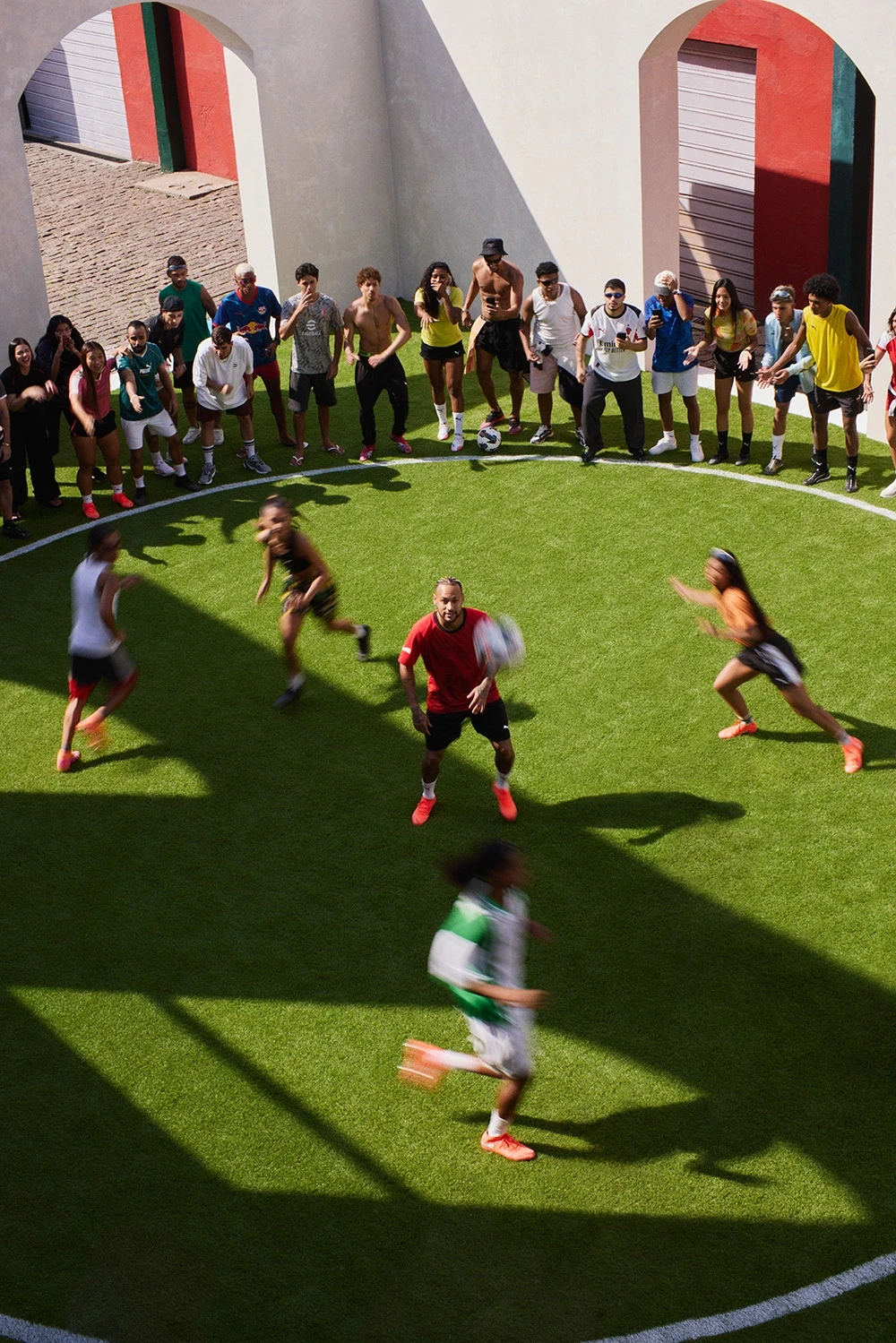
FALCA produced the Brazil leg with local support from As Meninas. The brief demanded a set large enough for simultaneous action — high-energy sequences alongside slower storytelling moments. With three parties instead of five, decisions on the set were made in real time.
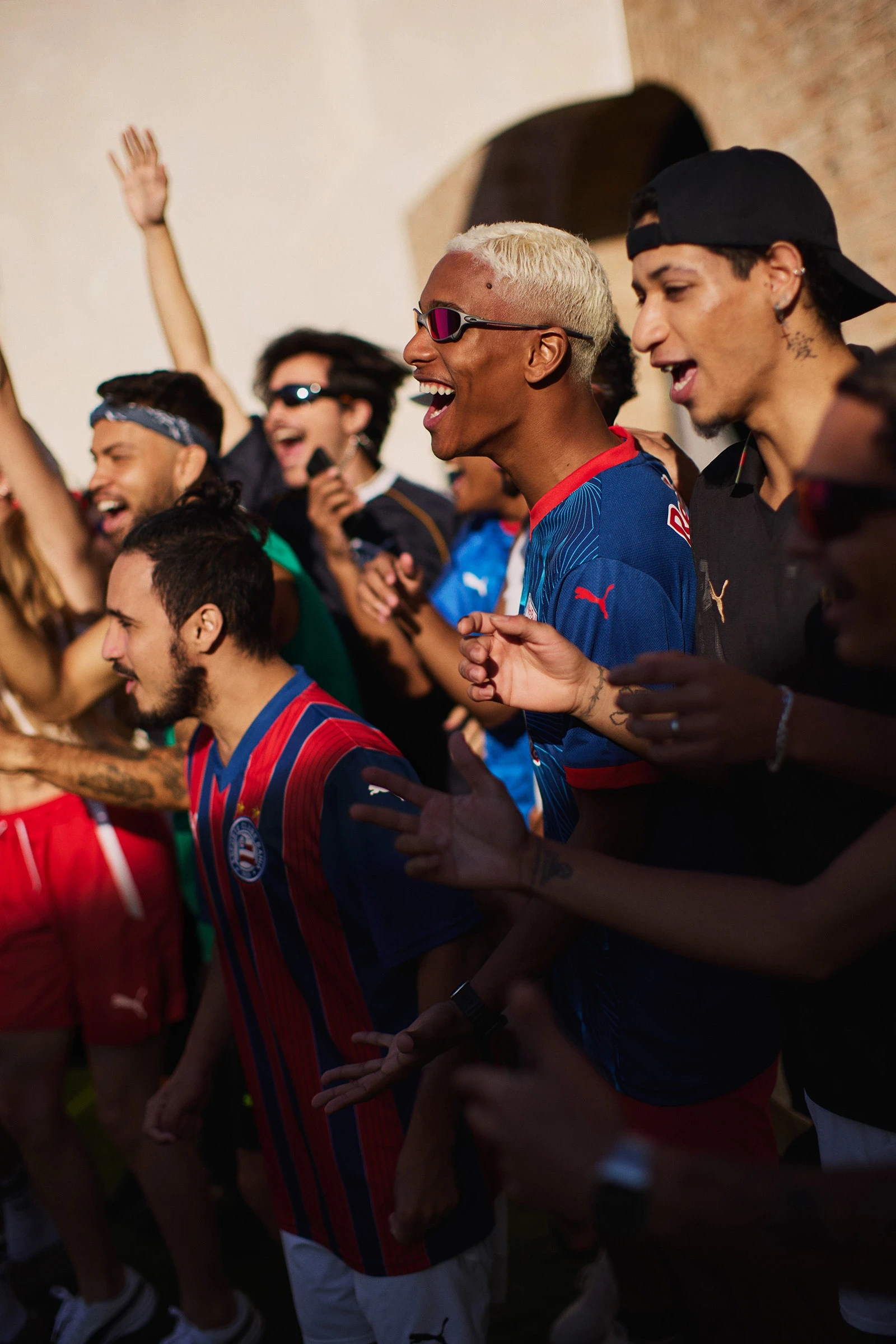
The casting favored street freestylers like Giulia Araki and Vinicius Lima — the ball control needed to look insane and authentic. This was also a distribution decision: casting local Brazilian talent created organic amplification through their networks and communities.
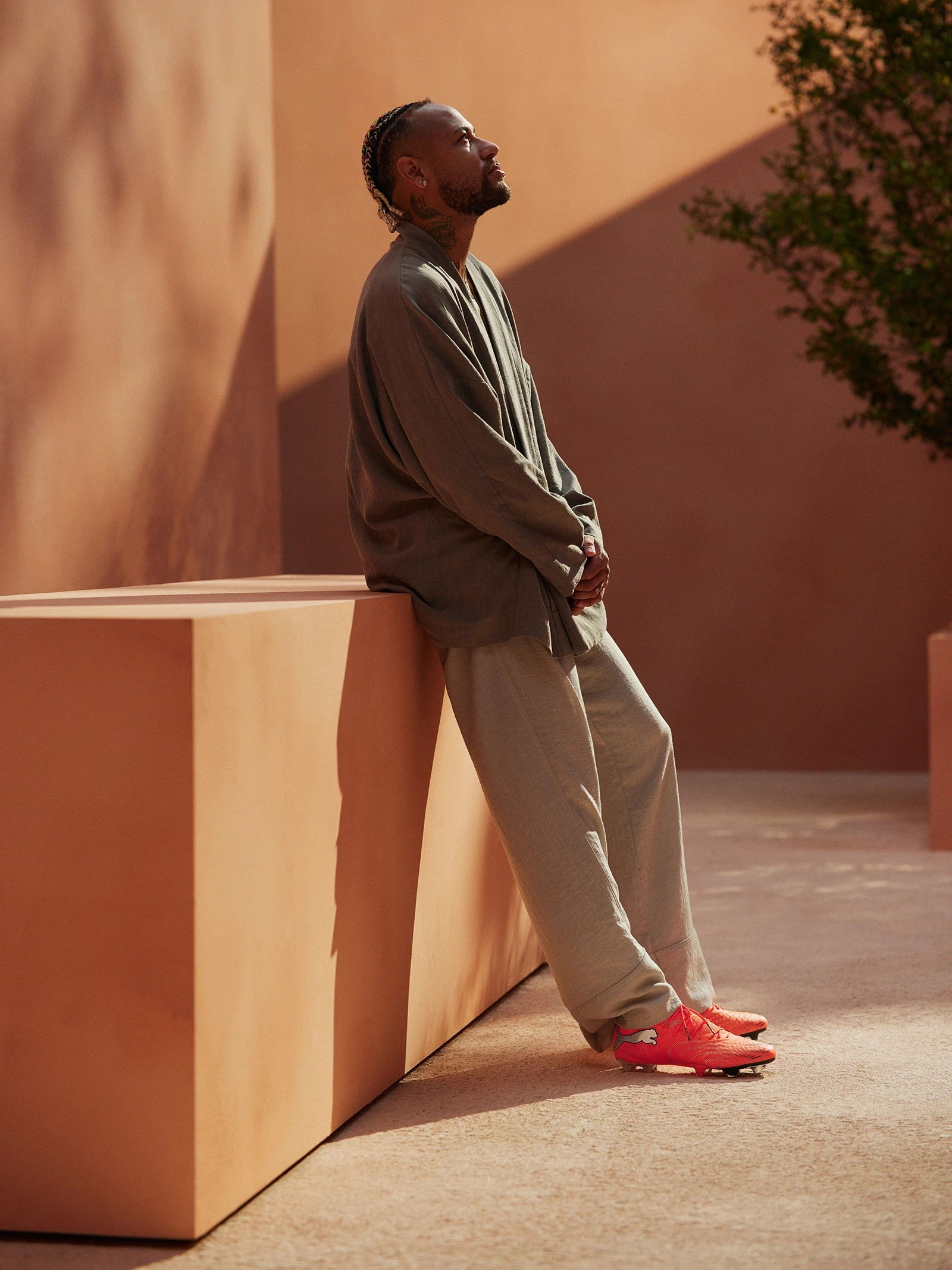
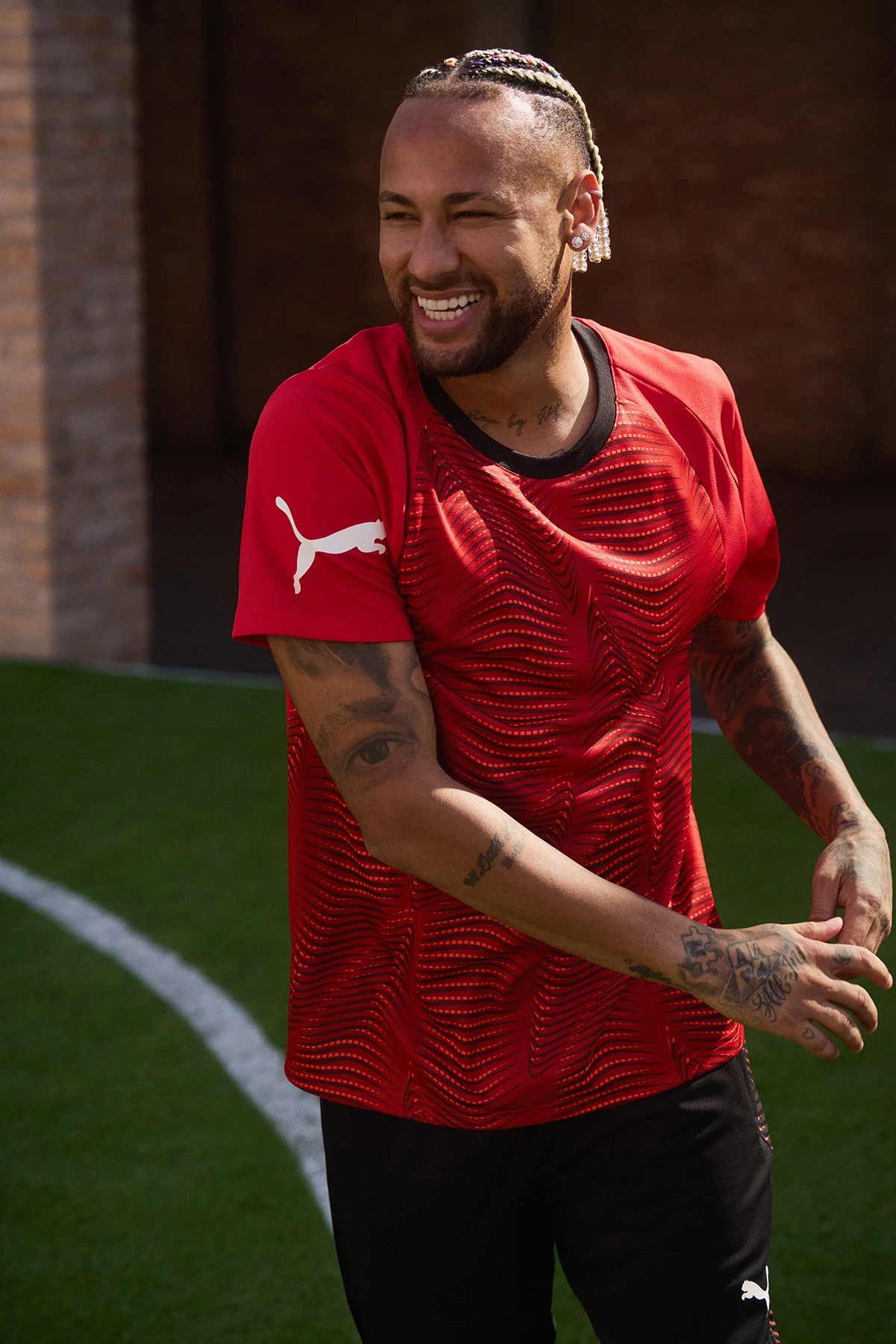
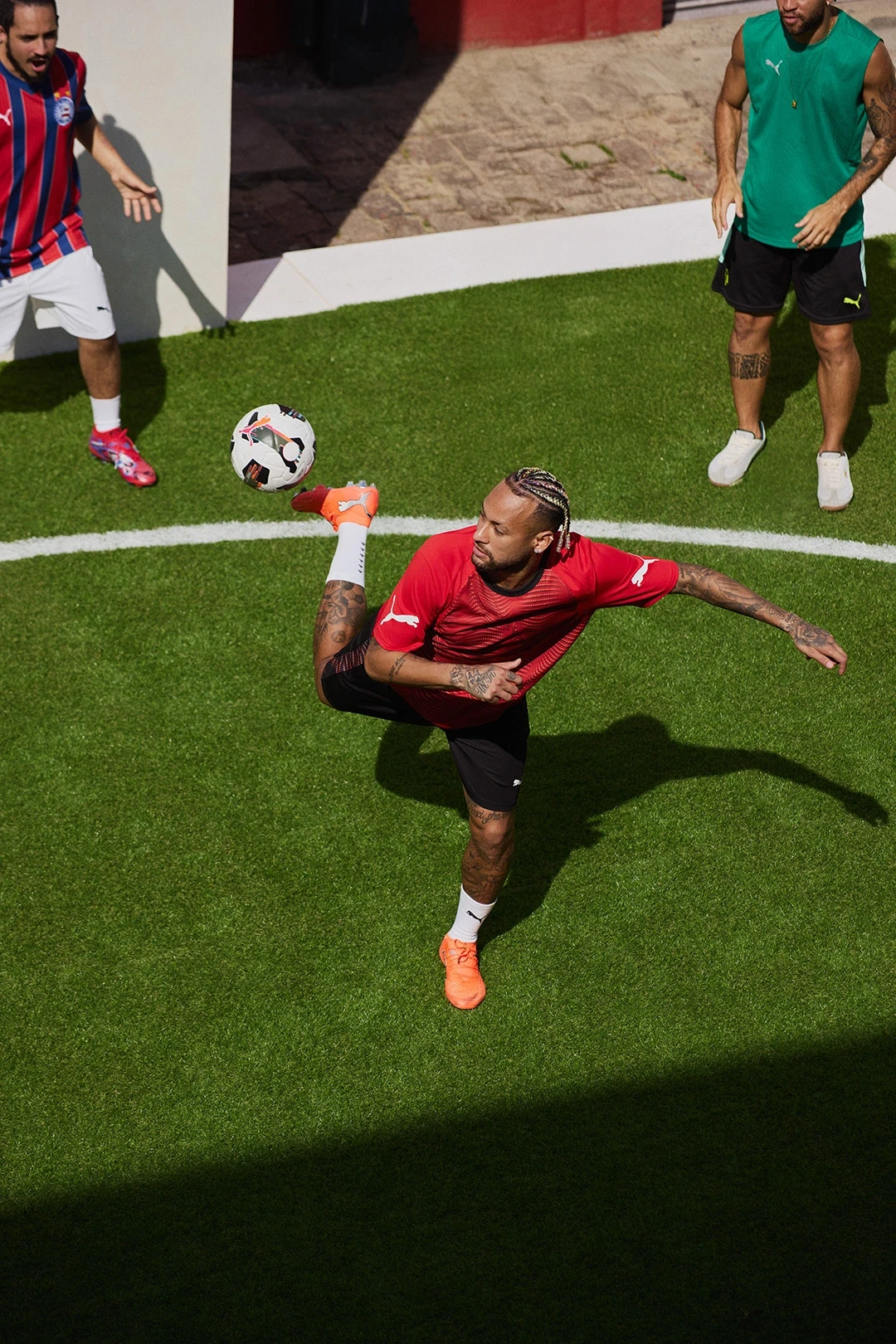
Christopher Behrmann shot as DP, and Theo Cottle handled stills. Sports choreographer Ryan Lee designed the football action sequences for the Neymar scenes — the movement needed to feel instinctive rather than staged, which meant building each sequence around what the players could actually do, not what a storyboard dictated. Production flew in tattoo artist Ignasi Ruiz to perform transfer tattoos, ensuring visual continuity in Neymar's "inked" story.
[PLACEHOLDER: Quote from Sam Moir, PUMA production team]
"What I really like about working with Puma is that while they have a clear vision, they actually want your input. Shooting in Brazil was a surreal experience, but the best part was taking these footballers out of their element — creating these weird worlds for them, like making them a chef, a dance coach, or a guru. I'm just really happy I got to direct a football commercial that didn't have to stay inside a stadium."
— Luca Homolka, Director
The Neymar Question
Worth addressing directly. Neymar is not the superstar he used to be. He's not scoring at the highest level. His best competitive years are behind him.
But he remains an attention magnet. His cultural footprint and social following haven't diminished at the same rate as his on-pitch output. For PUMA, that distinction matters — you're not buying goals, you're buying association with a player who represents instinctive, creative football. Exactly what the Future 9 embodies.
The Creative Sanctuary works precisely because it doesn't need peak athletic Neymar. It needs cultural-figure Neymar — a guru, a guide, a presence. The treatment was built around that reality, not in spite of it. And the lean structure helps: when you're not paying agency fees on top of talent costs, you can allocate more to maximizing what that talent delivers on set.
London — September 2025
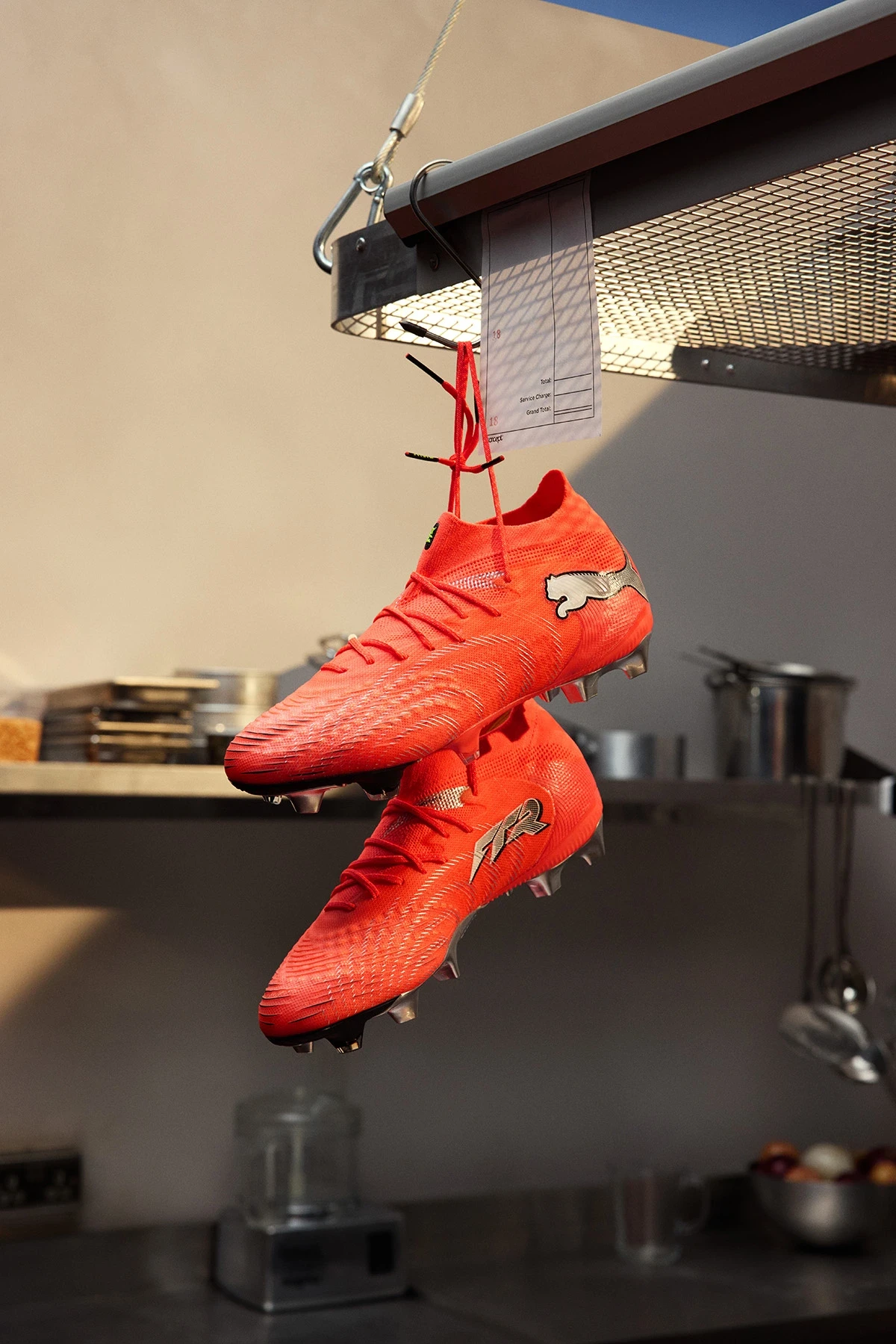
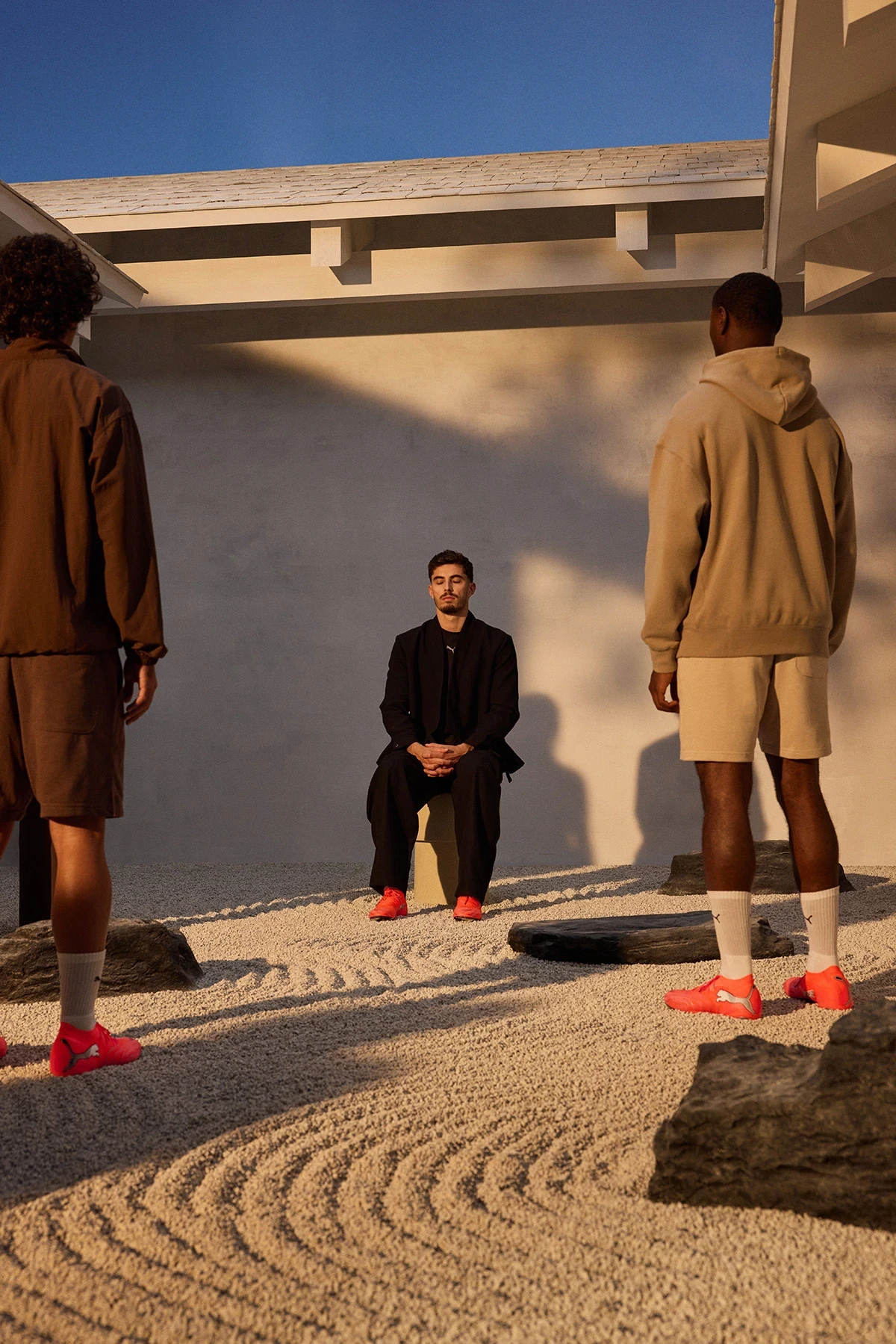
Two months later, the campaign moved to Neasden Studios. Production designer Julian Knaack had 13 days to build four sets — Celebration, Kitchen, and Mindfulness rooms for video, plus a fourth for stills. Three players (Kai Havertz, Morgan Rogers, and Sandy Baltimore) across two days, September 10-11.
The production ran in parallel: shooting on one setup while the next was dismantled and reset. AD Julian Higgins kept the machine moving with methodical calm. Props lead Ryan McCarthy delivered detailed set pieces that brought each scene to life. Behrmann returned as DP, matching the London studio light to the humid Santos atmosphere. Jordan Greene handled stills. A crane and moving lighting setups sped transitions between wide establishing shots and tight football-specific actions.
Having the same DP across both legs, with direct communication to the director and brand, enabled visual coherence without excessive post-production correction—an underrated challenge in multi-location campaigns that becomes exponentially harder when notes pass through intermediary layers.
Production as Distribution Architecture
Most campaigns treat production and distribution as sequential steps. The Creative Sanctuary was structured differently.
Format was built in, not added after. The modular set design — three themed rooms plus a stills set — meant each room functioned as an independent content stream. Each player represented a different audience segment and market. The in-house social teams, working alongside the crew, created social-native content in parallel, not reverse-engineered from the hero film weeks later.
Casting was a distribution decision. Brazilian freestylers and their communities became organic distribution channels. This is harder to execute when casting goes through an agency optimizing for the hero film rather than the social ecosystem around it. Beyond the cast, the use of local influencers in Brazil acted as an organic multiplier — there's a specific energy when a global brand chooses your country to produce its flagship campaign, a local pride that translates into sharing and genuine enthusiasm that paid media can't replicate.
The platform was designed for longevity. The modular Sanctuary concept lets PUMA drop new players in as seasons progress. The Manchester Flow House event in November 2025 — featuring Jack Grealish and Noah Okafor — extended the campaign universe into a live activation, creating a second content wave. The Creativity pack launch in February 2026 continues the thread.
Applying our internal distribution analysis framework, platform presence was strong from launch across Instagram, TikTok, YouTube, and the brand website, with format-adapted content for each platform. Format optimization was above average because production was designed for it — vertical, horizontal, short cuts, stills all captured natively, not cropped as an afterthought. Community penetration benefited directly from the Brazilian casting and influencer strategy.
What the Model Requires
The lean structure isn't for every project. It requires a brand with in-house creative leadership willing to own decisions rather than delegate them to an agency. A director who operates as a creative partner. And a production company that can manage preparation and execution across geographies — crew, logistics, local partnerships, budget allocation — without the scaffolding of agency project management.
When those conditions exist, the math changes. Not just on cost, but on speed, creative coherence, and the ability to build distribution into production from day one rather than treating it as someone else's problem after wrap.
For the Creative Sanctuary, those conditions existed. The output speaks for itself.
FALCA Visual S.L. is a production company based in Barcelona, operating across Spain, Portugal, Serbia, and the Middle East. We produce video and photo campaigns for brands including PUMA, BMW, Ferrari, Armani, and Reebok.
STILLS + MORE
TAGS
(cOLLABORATORS)
(year)
2026